Buying Guides
Applications of Different Screw Types
Quickly understand the application scenarios of different screw rods
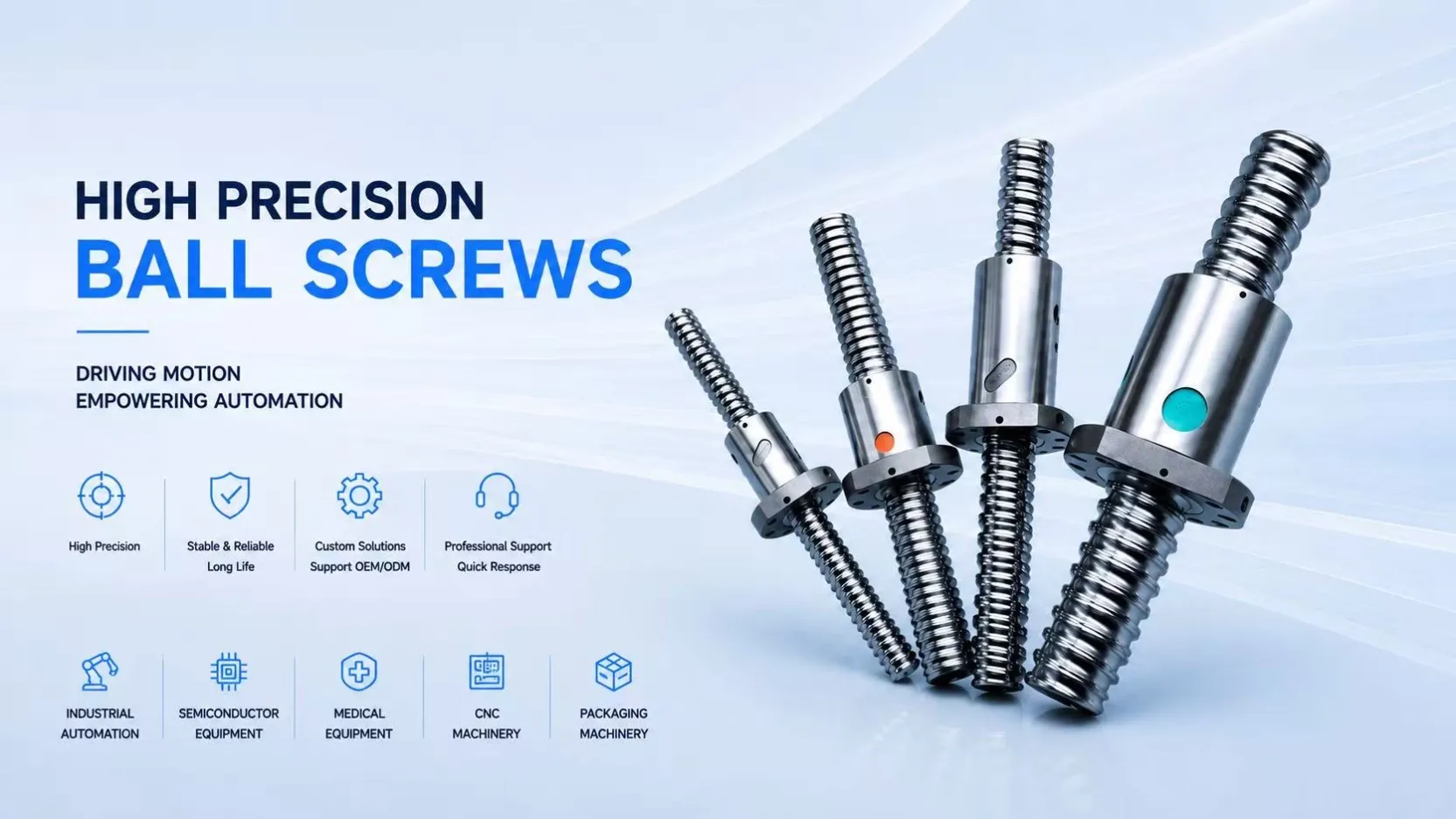
Selecting the right screw drive system is critical for achieving the desired performance, accuracy, and cost in a machine. Different types of screws are designed for different working conditions, and understanding their applications can help engineers and buyers make better decisions.
In this article, we explore the most common screw types and where they are typically used.
1.Trapezoidal lead screws use sliding contact between the screw and nut. They are known for their simplicity and self-locking characteristics.
- Elevating type: Electric lifting platform, simple cargo elevator, lifting clothes drying rack, jack
- Manual / Fine-tuning mechanism: Machine tool handwheel slide table, workholding fixture, manual adjustment of laboratory bench
- Ordinary non-standard equipment: Small conveyor auxiliary mechanism, woodworking machinery, simple medical gurney
- Materials available in stainless steel, nuts can be made of copper/PEEK, suitable for some corrosive environments
2.Rolling ball screw.They are cold-rolled and formed. provide a good balance between performance and cost High transmission efficiency making them suitable for most industrial automation projects.
- Packaging machinery
- Woodworking machines
- Printing equipment
- Pick-and-place systems
- General automation equipment
3.Grinding lead screw,It is processed by thread grinding, with extremely high repeatability accuracy of the lead, excellent rigidity, high efficiency and long service life. It is particularly suitable for application scenarios that require high precision and speed.
- CNC machining centres
- Laser cutting machines
- Industrial robots
- Linear modules
- Semiconductor equipment
- Medical devices
In the next article, let's introduce their advantages and disadvantages